Restructuring the Gulf: Why 2026 requires more than just capital

In 2025, private market investors continued to see strong momentum across the region. Transactions surged in MENA, including nearly $14B invested in H1 alone (almost surpassing all of 2024), a 23% increase in M&A activity (~9 months), and a 120% increase in IPO activity (~9 months).
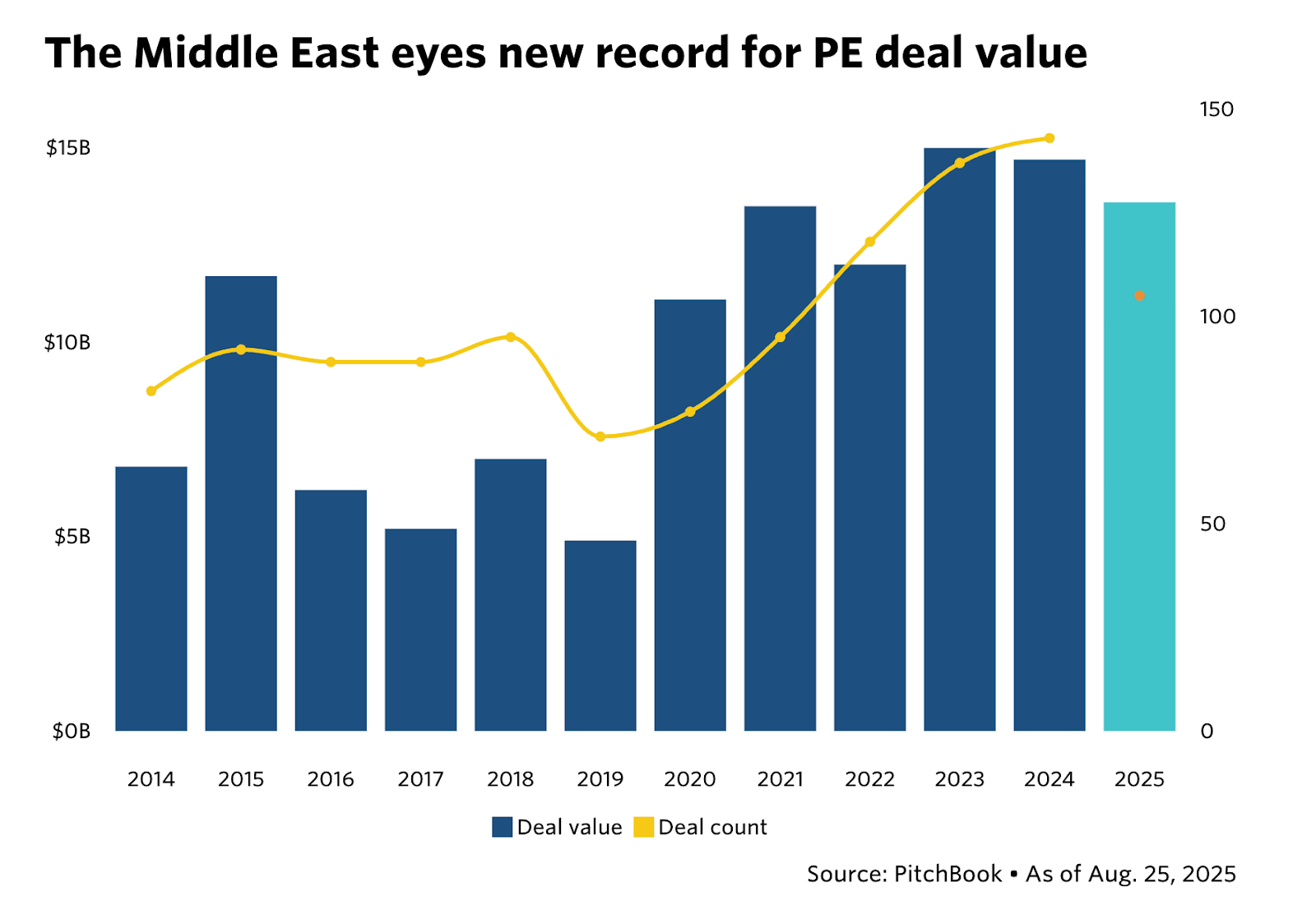
But while private markets have been on pace to shatter many records in 2025, new trends and technologies mean the future of private markets won’t look like the past.
As we look toward 2026, we aren't just seeing a growth in investment activity; we are seeing a fundamental restructuring of how private capital moves in the MENA region.
The new era of private capital demands better technology, cross-border capabilities, and liquidity opportunities for investors. Participants expect robust execution workflows, data accuracy, and traceability in their transactions - a requirement for the continued development of the region’s private capital markets.
Here are our predictions for where private markets in MENA are heading in 2026, backed by the data from this past record-breaking year.
1. Mid-market deals take center stage
M&A activity in the MENA region surged 23% in the first nine months of 2025, reaching $69.1 billion. But look closer at the deal size: 96% of disclosed deals in the first half of 2025 were under $100 million.
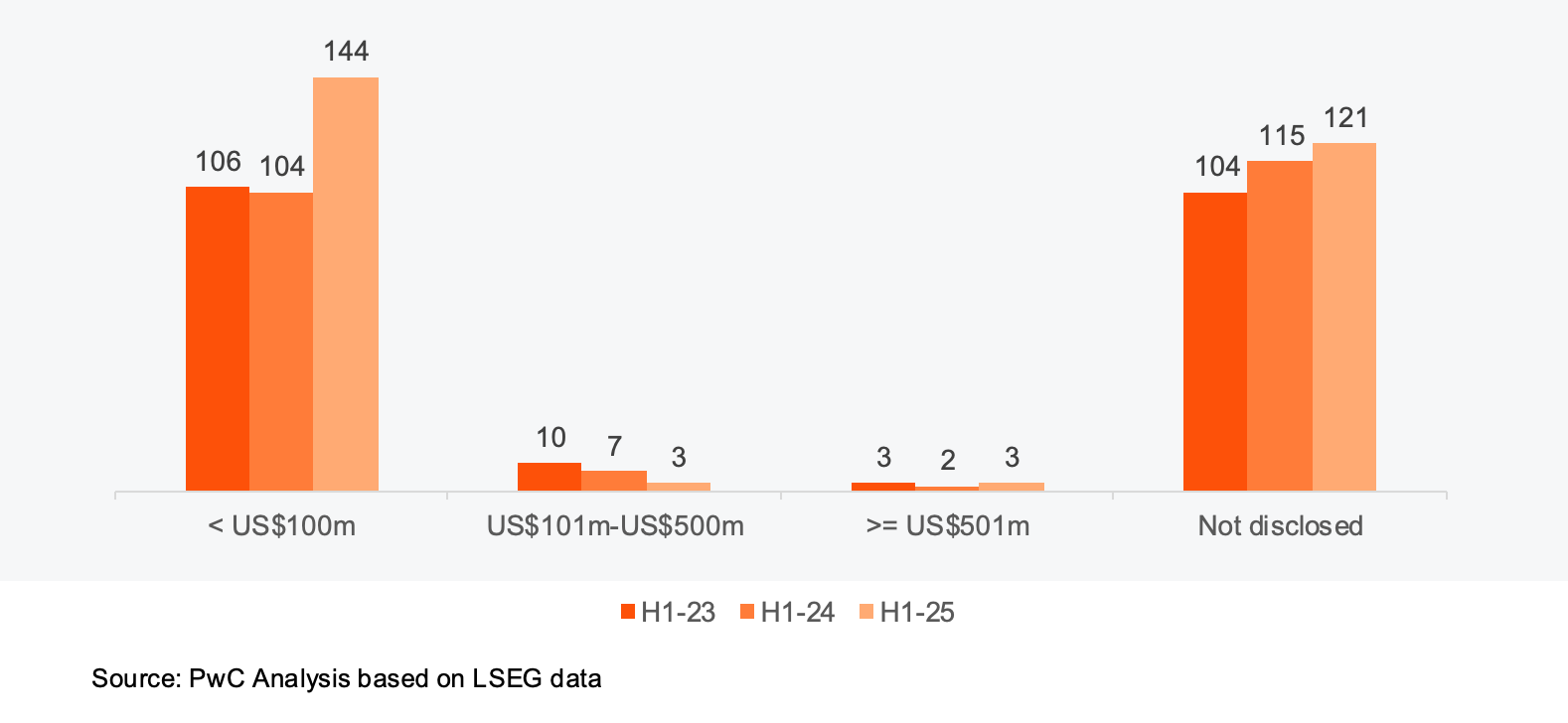
Institutional buyers and their investors are increasingly transacting in this segment of the market.
We’re moving toward strategic consolidation, with sectors such as technology and healthcare driving this, in which smaller, bolt-on acquisitions are the primary way to build value.
In 2026, acquisition opportunities will remain in the high-velocity middle market.
With most activity concentrated in deals under $100M, the winners will be the firms that can source, execute, and integrate these smaller targets efficiently. If your deal team is slowed down with fragmented processes and expensive transaction tools, your returns are already suffering.
2. Cross-border deals return with a surge
For a while, it felt like the region was dealmaking in a silo. But the tides turned significantly in 2025, and 2026 is shaping up to be the year global capital officially re-enters the chat.
In the first nine months of 2025, inbound deal volume increased by 25% year-over-year while deal value grew 34%. Cross-border transactions reached their highest level in five years, accounting for 54% of deal volume.
Our take? Global investors are back, but they are bringing their own compliance standards, expectations, and sophistication. They want organized data rooms, investor management tools, and scalable infrastructure. The region's attractiveness as a destination for capital is great news, but only for firms with the infrastructure to service their transaction needs from wherever they are.
The surge in cross-border activity also highlights regional companies that are no longer building solely for a MENA customer base. We expect regional companies to continue building for global markets and scaling to sizes that attract global investors.
3. Private markets benefit from the $1T wealth transfer
A staggering amount of capital is being passed down to younger investors.
The next-gen to these fortunes are not only interested in the traditional asset classes like public equities and real estate that defined their parents’ portfolios. The new stewards of capital in the Gulf are aggressively pivoting toward riskier, high-alpha asset classes, with nearly 80% of surveyed investors planning to up their allocation to private markets next year.
With a growing interest in digital assets, direct co-investment structures, and global diversification, younger investors expect technology to keep pace with their needs.
The right set of transaction tools will enable even greater adoption as the ease and cost of executing deals continue to improve.
4. Secondaries offer much-needed liquidity
The IPO market is active, but it's selective. The gap between investors wanting to exit and companies ready to IPO is widening.
IPO volume jumped 120% in Q3 2025, but total proceeds actually fell by 20%. While a handful of companies are in the IPO pipeline for early 2026, it’s not enough to meet the liquidity needs of investors whose portfolios have been locked up for years.
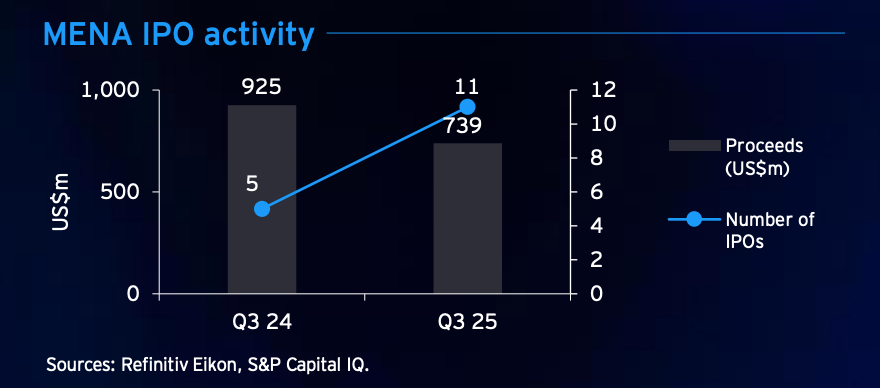
Investors in the region have made it clear: they want more options for early liquidity and portfolio rebalancing.
As listing values decline and investor demand for exits increases, secondary sales will become a primary source of liquidity for early investors. We expect 2026 to be the year when secondary transactions move from a fringe investor request and become a standard portfolio management tool.
2026 requires infrastructure
2026 is shaping up to be the year of mid-market volume, cross-border complexity, private market adoption, and early liquidity needs. The trends all point to one thing: complexity is growing, and investors need new tools to support their needs.
Manual spreadsheets and wet-ink signatures are old workflows that cannot mobilize the next trillion dollars of private capital. Digital infrastructure is essential because it replaces administrative bottlenecks with guardrails. By automating onboarding, compliance, and execution, digital transaction systems can be modular, scalable, and asset-agnostic. This lowers friction and reduces data errors, ensuring that capital meets clarity while delivering the transparency and control that modern investors demand.
Zest provides SPV infrastructure as well as FSRA-regulated escrow and distribution services to funds, syndicate leads, companies, and family offices. Our comprehensive set of services enables private market participants to digitally execute their transactions with speed, trust, and for a fraction of the cost of manual execution.
Ready to capitalize on these trends? At Zest, we build the infrastructure that powers this new era of private markets. Whether you’re a family office navigating new stewardship or a GP managing a complex secondary, we make the transaction execution seamless.
Subscribe to the Zest Wire. Insights on private markets.
Biweekly practitioner insights on capital activity, market trends, and conversations shaping MENA and emerging private markets.
From our blog


The private-market platform today’s deal makers demand.